Distributed Hash Table
In Networks & Distributed Systems class, we were assigned to write a Distributed Hash Table (DHT) in Python  . The DHT protocol was provided by Dr. Nathan Backman of Buena Vista University.
Originally written with @jackmford 
DHT
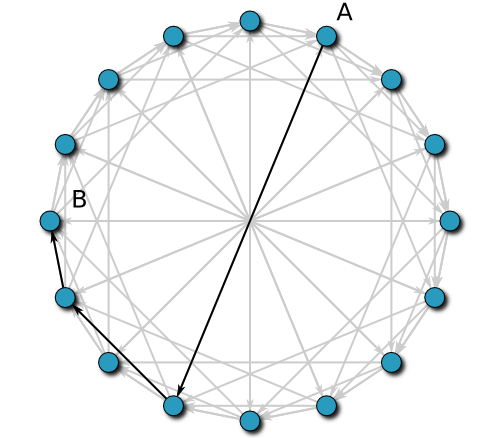 This is easily in my top three favorite projects/assignments at BVU.
Post college, I spent time refining the code and creating a Python interface to the main DHT code.
Best part
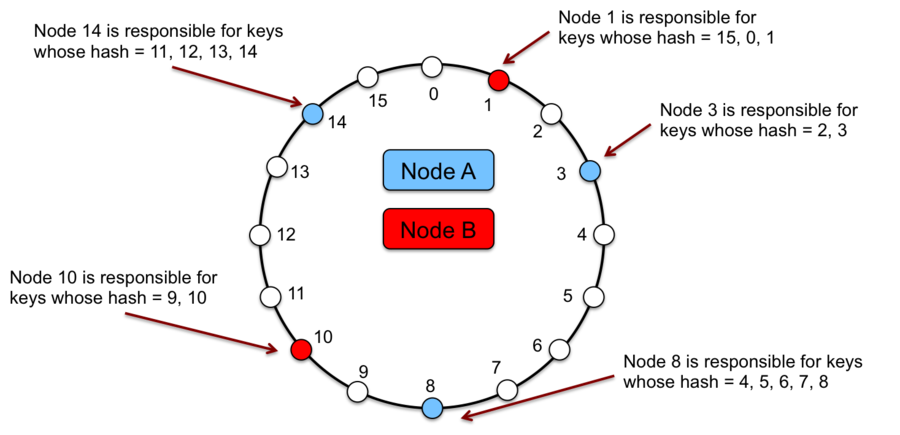
Implementing the ownership algorithm (how the nodes determine who owns a specific hash) was the most challenging but rewarding piece.
So, what is it??
TL;DR
Decentralized storage using ( Key, Value ) pairs.
Usage
The entire ring is reachable from any entry point (a node [computer participating in the DHT]). Then the user can store ( Key, Value ) pairs within the system that can be retrieved again later.
As mentioned on the Chat Channels page, benefits of a DHT are:
- Data persists as long as the DHT does
- being decentralized, data shifts owners as nodes enter and exit the DHT
- Decentralization means no single computer is in charge of the system
- nodes communicate and adjust ownership accordingly
- K-Safety (not implemented here)
- storing backups of data with predecessors in case sudden removal of a node
Explanation
I think Hazelcast’s definition explains it best:
Visualization
Data Types
Data types our DHT adhered to.
- Key/hash: SHA-1, 160-bit, 20-byte UTF-8
- Key used to lookup values in the DHT
- valSize: 8-byte, big endian
- valSize is the size of the data being stored
- peerAddress: [4-byte ip][2-byte port big endian]
- peerHash/key: SHA-1 hash of “IP:Port”
- Example: SHA1( “192.168.0.1:5000” )
Operations
A few of our DHT operations:
Insert - Add/update/replace an item to/in the DHT
Remove - Removes an item from the DHT
Get - Retrieves an item from the DHT
Exists - Check to see if an item exists within the DHT
Owns - Asks a peer who they know to be the nearest owner to a key
...
Thanks
Thanks for reading about my experience with the Distributed Hash Table.
Best.